22 articles
 AI Agents for BusinessCustom CRM Dashboard Cost: The 2026 Small Business GuideA custom CRM dashboard typically costs $3,500 to $60,000 or more to build, plus $75 to $2,000 a month for hosting and maintenance. Most small businesses land in the $8,000 to $20,000 build r...19 Sep 2026
 AI Agents for BusinessAI Chatbot Deployment Timeline: How Long It Really TakesAI chatbot deployment timeline explained: real day-by-day ranges for discovery, build, testing and WhatsApp or LINE launch, straight from Ongito's builds.10 Sep 2026
 AI Agents for BusinessLINE Messaging API vs LINE Official Account ExplainedLINE Messaging API vs LINE Official Account: one is your business account and plan, the other is where the bot logic gets built. Know which you need.9 Sep 2026
 AI Agents for BusinessAI Voice Agent Cost: Build Price, Monthly Fees, and Per-Minute RatesAn AI voice agent typically costs $2,000 to $5,000 to build, $400 to $1,200 per month in platform fees, and $0.07 to $0.20 per minute in call costs. A small business handling 300 to 1,500 mi...3 Sep 2026
 AI Agents for BusinessHow to Choose the Right AI Agent Vendor for Your Small BusinessChoose an AI agent vendor by checking five things in order: channel coverage (WhatsApp, LINE, web chat), native integration with your existing CRM, a transparent pricing model with no hidden...3 Sep 2026
 AI Agents for BusinessHow to Build a Lead-Generation AI Agent: A Step-by-Step GuideLearn how to build a lead-generation AI agent step by step: define qualifying questions, connect WhatsApp or web chat, route leads to your CRM, and set follow-up triggers.3 Sep 2026
 AI Agents for BusinessAI Agent vs Chatbot: What Is the Real Difference?AI agent vs chatbot compared: chatbots follow scripted rules, AI agents reason and act - booking, CRM updates, WhatsApp replies. See the differences in one table.
A chatbot follows scripted...27 Aug 2026
AI Agents for BusinessAI Agent vs Chatbot: What Is the Real Difference?AI agent vs chatbot compared: chatbots follow scripted rules, AI agents reason and act - booking, CRM updates, WhatsApp replies. See the differences in one table.
A chatbot follows scripted...27 Aug 2026 AI Agents for BusinessHow Does an AI Agent Manage Online Reviews and Reputation for a Small Business?An AI review and reputation agent automates three tasks: it sends a review request by SMS or WhatsApp after a transaction, drafts a reply to every review for a human to approve, and alerts t...27 Aug 2026
 AI Agents for BusinessDo AI Chatbots Actually Increase Leads? What the Evidence ShowsYes, AI chatbots increase leads when they fix a documented problem: response speed. Harvard Business Review research found leads contacted within 5 minutes are about 100 times more likely to...27 Aug 2026
 AI Search & GEOChatGPT vs Google AI Overviews vs Perplexity: Where Should an SME Show Up First?ChatGPT, Google AI Overviews and Perplexity cite different sources in different ways. Here's how each one decides who to recommend, and which your SME should prioritize first.
A client sent...11 Aug 2026
AI Search & GEOChatGPT vs Google AI Overviews vs Perplexity: Where Should an SME Show Up First?ChatGPT, Google AI Overviews and Perplexity cite different sources in different ways. Here's how each one decides who to recommend, and which your SME should prioritize first.
A client sent...11 Aug 2026 AI Agents for BusinessAI Customer Service for Japanese Retail: What You Can Actually Deploy in Two WeeksWhy Japanese retail is moving to messaging-first customer service
Japan's customer service problem looks different from the West. While US and European retailers pour effort into website ch...28 Jul 2026
AI Agents for BusinessAI Customer Service for Japanese Retail: What You Can Actually Deploy in Two WeeksWhy Japanese retail is moving to messaging-first customer service
Japan's customer service problem looks different from the West. While US and European retailers pour effort into website ch...28 Jul 2026 AI Agents for BusinessAI Agents for SMEs: Five Minutes vs. Three Hours.AI Agents for small and medium-sized enterprises are software products using a large language model to autonomously carry out a goal-oriented process by solving problems step-by-step. Tradit...19 Jul 2026
 AI Agents for BusinessAgentic AI Economy: Why 75% of Companies Are Adopting It and Only 15% Are WinningAgentic AI Economy: Why 75% of Companies Are Adopting It and Only 15% Are Winning.
I watched a client's WhatsApp inbox light up with 123,000 conversations in a single week, and not one of ...18 Jul 2026
AI Agents for BusinessAgentic AI Economy: Why 75% of Companies Are Adopting It and Only 15% Are WinningAgentic AI Economy: Why 75% of Companies Are Adopting It and Only 15% Are Winning.
I watched a client's WhatsApp inbox light up with 123,000 conversations in a single week, and not one of ...18 Jul 2026 AI Agents for BusinessLlms.txt Playbook: What It Actually Does for AI CrawlersSometime around the end of 2024, a proposal for creating a file called llms.txt began circulating in SEO communities. By early 2025, roughly half the Internet was either building one or sayi...16 Jul 2026
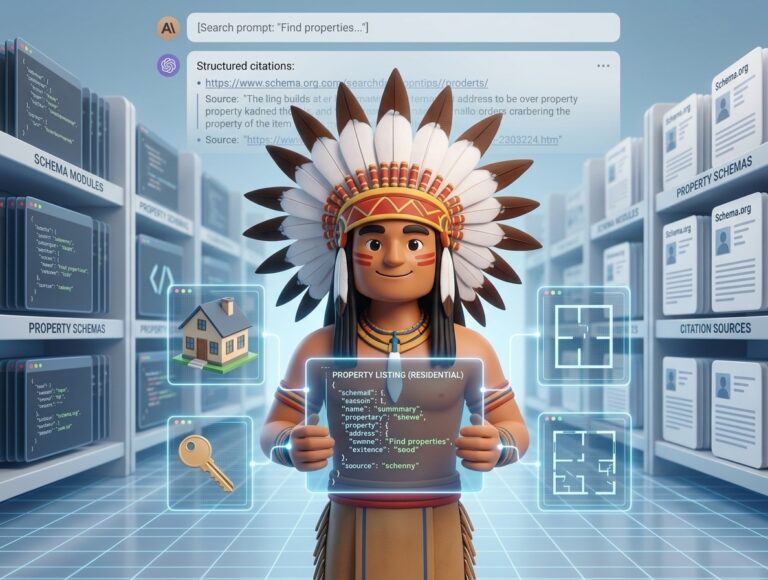 AI Agents for BusinessHow Property Listings Get Cited by Perplexity and Claude: The Structured Data PlaybookA buyer asks Perplexity "3-bedroom homes under $600k in Round Rock, Texas" and gets back five listings with addresses, prices, and square footage, fully cited, fully clickable. Your listing ...12 Jul 2026
 AI Agents for BusinessAI Shopping Assistants Are Recommending Stores. Here’s How to Become OneAI shopping assistants suggest stores to customers using structured product information, third party customer ratings and reviews, and product comparison information that answers questions d...8 Jul 2026
 AI Search & GEOFAQ structured data will not get you cited by ChatGPTFAQ schema will not get your business cited by ChatGPT. Google retired FAQ rich results on May 7, 2026, and an Ahrefs study of nearly 1,900 pages found that adding JSON-LD schema produced no...2 Jul 2026
 AI Agents for BusinessProperty Listings in AI Search: Get Cited by PerplexityWebsites for real estate are getting crawled by Perplexity through building data-heavy pages, which are answer-based and use schema RealEstateListing and RealEstateAgent (which PerplexityBot...29 Jun 2026
 AI Search & GEOTokyo Tourism SEO: Your Hotel Is Invisible to AILast week, before my friend left for Tokyo, she showed me her phone. She hadn't opened Google. She'd opened ChatGPT and asked where to stay in Asakusa for a traditional vibe under 25,000 yen...25 Jun 2026
 AI Search & GEOHow to Appear in ChatGPT Answers: A GEO Checklist for SMEsPicture this. A potential customer opens ChatGPT instead of Google and types, "Who are the best [your category] providers for a small business?" Three seconds later, they have a short list a...24 Jun 2026
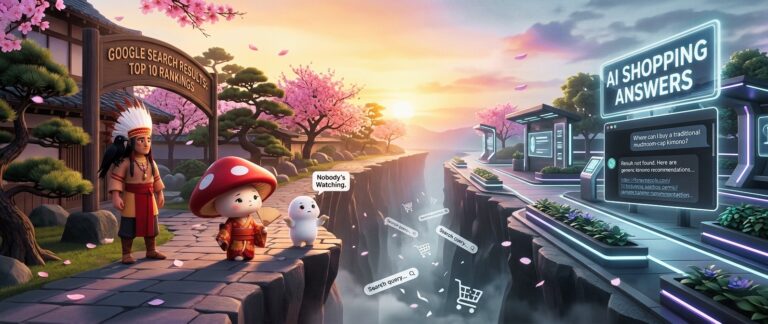 AI Agents for BusinessWinning Japan’s New Year Sales with AIEvery December, retail brands check their Google rankings, see page-one keywords, and assume New Year shopping season is covered. Then someone asks ChatGPT, Gemini, or Perplexity "what's a g...24 Jun 2026
 AI Agents for BusinessAI Agents for SMEs: Eliminate Busywork, Dominate GrowthIn mid-2026, AI agents have moved from enterprise pilots to the operating system of any growing business. Forrester's 2026 report found 68% of SMEs adopting agent workflows cut operational c...12 Jun 2026
Nothing matches that. Try another topic or clear the search.